
If you spend a lot of time sitting at a desk, looking at your phone, or training with your shoulders constantly pulled forward, your upper back can start to feel pretty stiff.
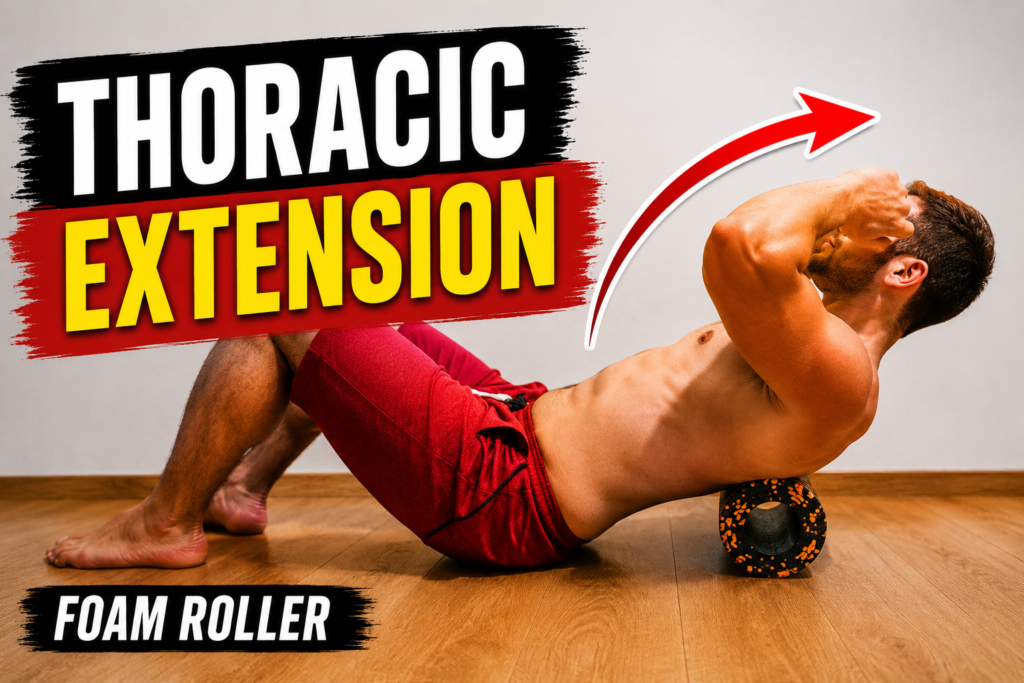
One exercise I’ve recently added to my own mobility routine is the foam roller thoracic extension.
It’s simple: you place a foam roller underneath your upper back and gently extend your thoracic spine over it. But there are a few details that matter. Where exactly should you put the roller? What should you do with your head? Should your lower back arch?
In this guide, I’ll explain how to perform the exercise properly, what it’s actually doing, and the mistakes I try to avoid.
What Is a Thoracic Extension?
Your thoracic spine is essentially the middle and upper portion of your spine, between your neck and lower back.
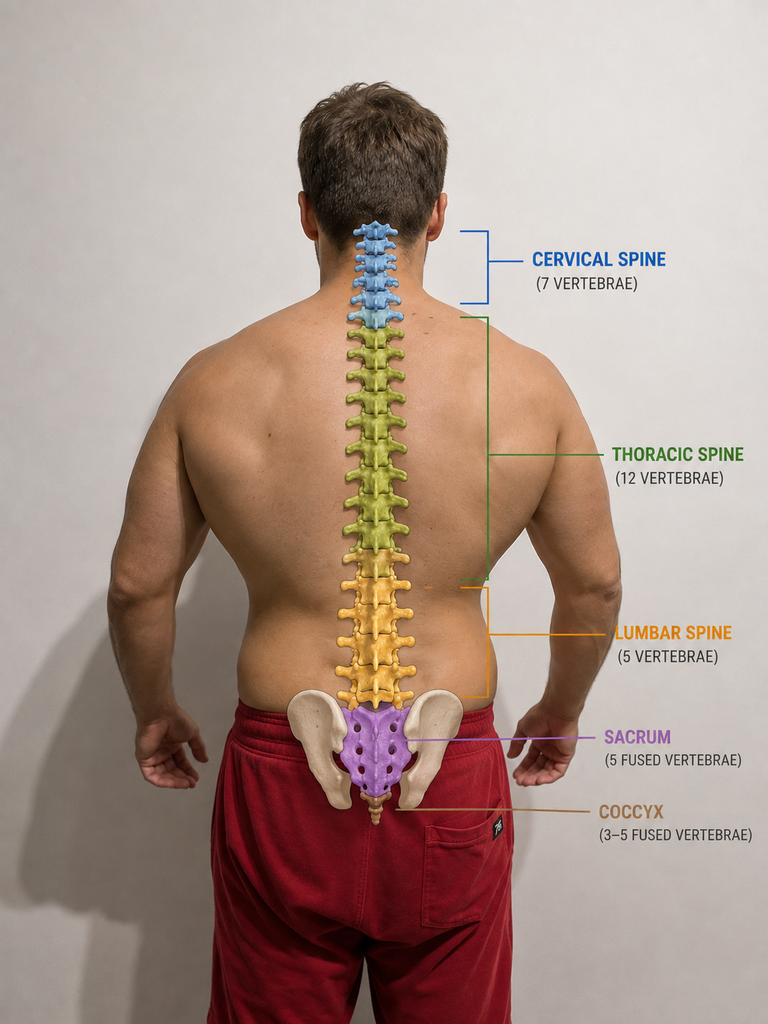
Thoracic extension is the movement of bringing this area of your spine backward from a flexed or rounded position.
If you spend a lot of time sitting with your upper back rounded forward, it can feel surprisingly difficult to extend through this area without compensating somewhere else.
That’s where the foam roller comes in. Rather than simply leaning your entire body backward, the roller gives you a point to extend your upper back over.
The goal isn’t to force your spine into some extreme position. You’re simply practicing controlled extension through your thoracic spine.
How to Do a Foam Roller Thoracic Extension
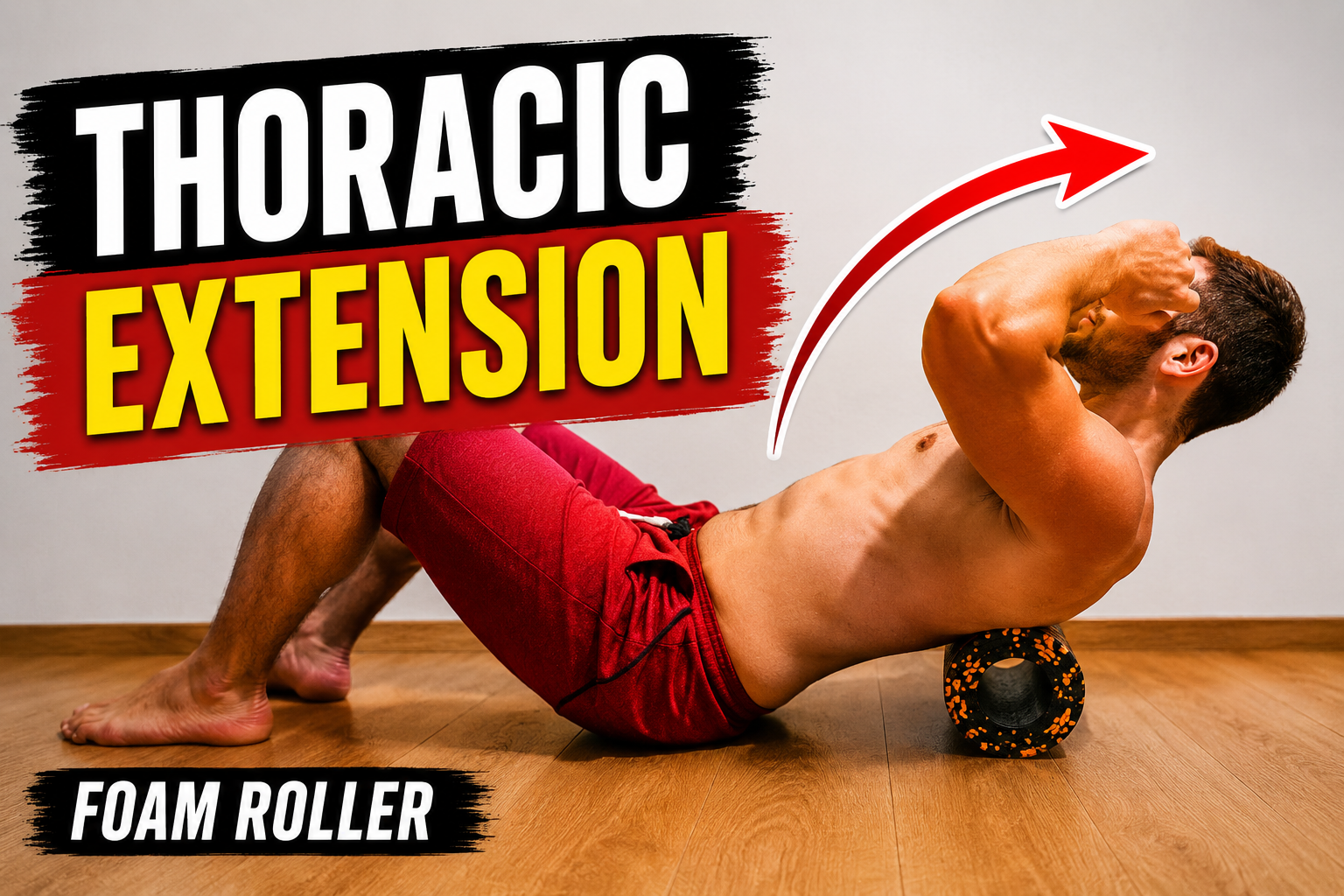
Here’s how I perform the exercise:
- Sit on the floor with your knees bent and feet planted.
- Place a foam roller horizontally behind you.
- Lie back so the roller sits underneath your upper or mid-back.
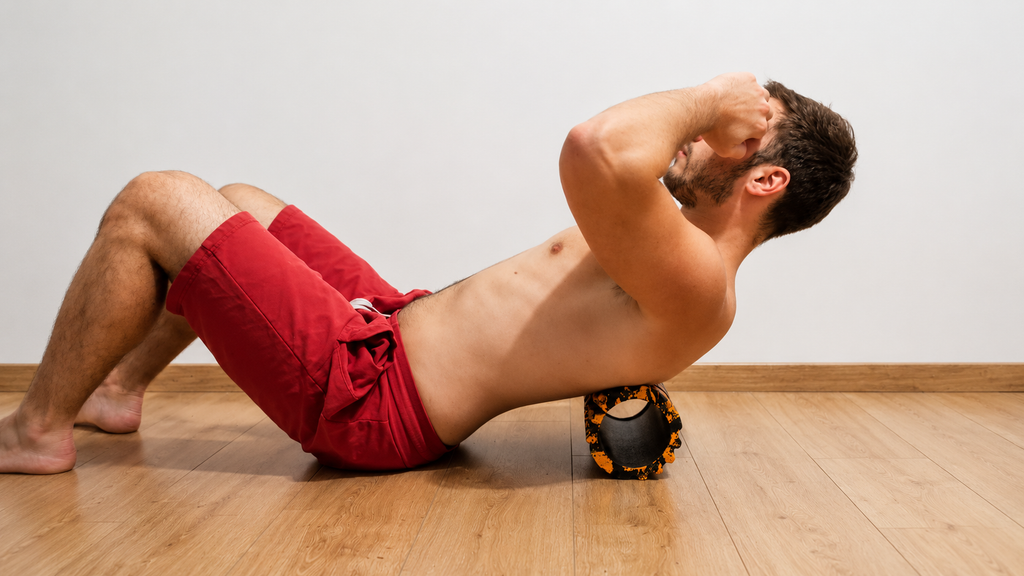
- Place your hands behind your head to support its weight.
- Keep your chin relatively neutral rather than aggressively throwing your head backward.
- Slowly extend your upper back over the foam roller.
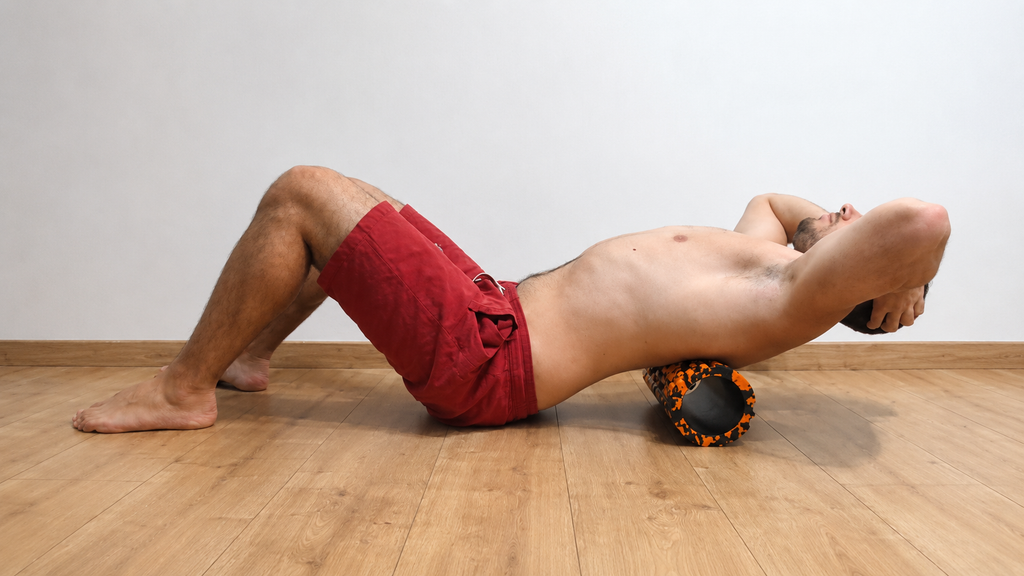
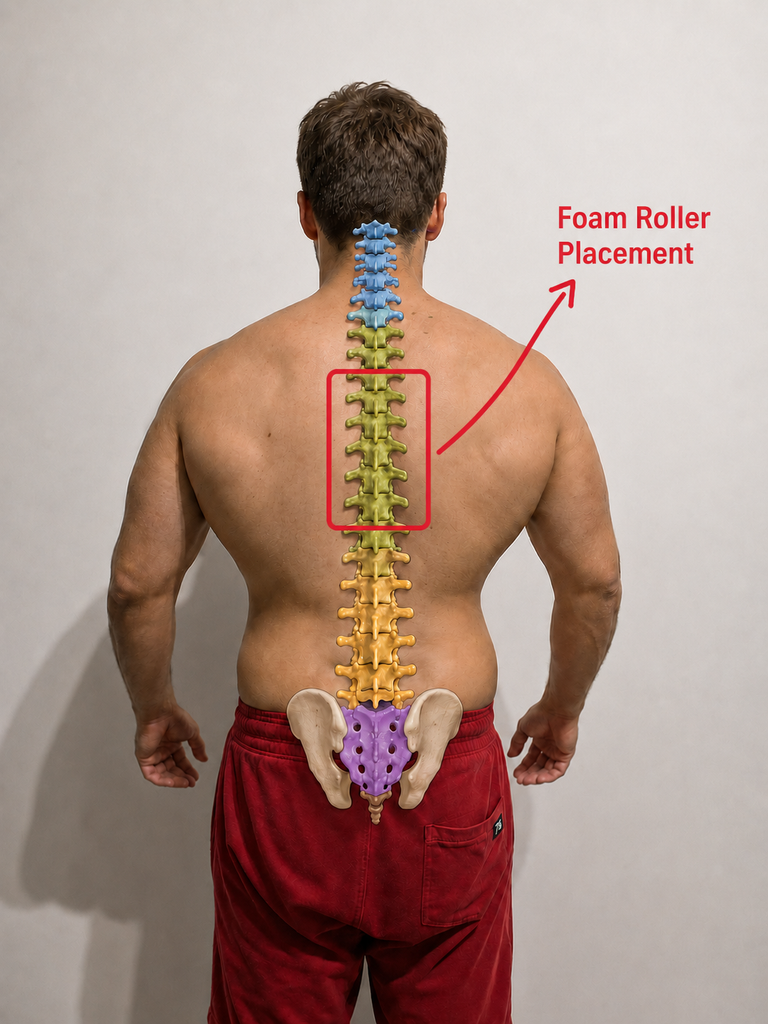
The foam roller can be repositioned along the mid-to-upper portion of your thoracic spine, as shown below.
- Pause briefly in a comfortable position.
- Return to the starting position under control.
You can then move the roller slightly higher or lower on your thoracic spine and repeat.
The movement should feel controlled. You don’t need to force yourself as far backward as possible.
What Should You Feel During a Thoracic Extension?
During the exercise, you should mainly feel movement or a gentle stretch through your mid-to-upper back.
You may notice that certain areas of your thoracic spine feel stiffer than others. That’s one reason you can reposition the foam roller slightly and repeat the movement at different points along your upper back.
What you shouldn’t be trying to create is a huge arch through your lower back or an aggressive stretch through your neck.
If you mainly feel the movement in your lower back, reduce the range and focus on extending your upper back over the roller. If your neck feels uncomfortable, make sure your hands are supporting your head rather than letting it drop backward.
The exercise doesn’t need to feel intense to be useful.

One Response